
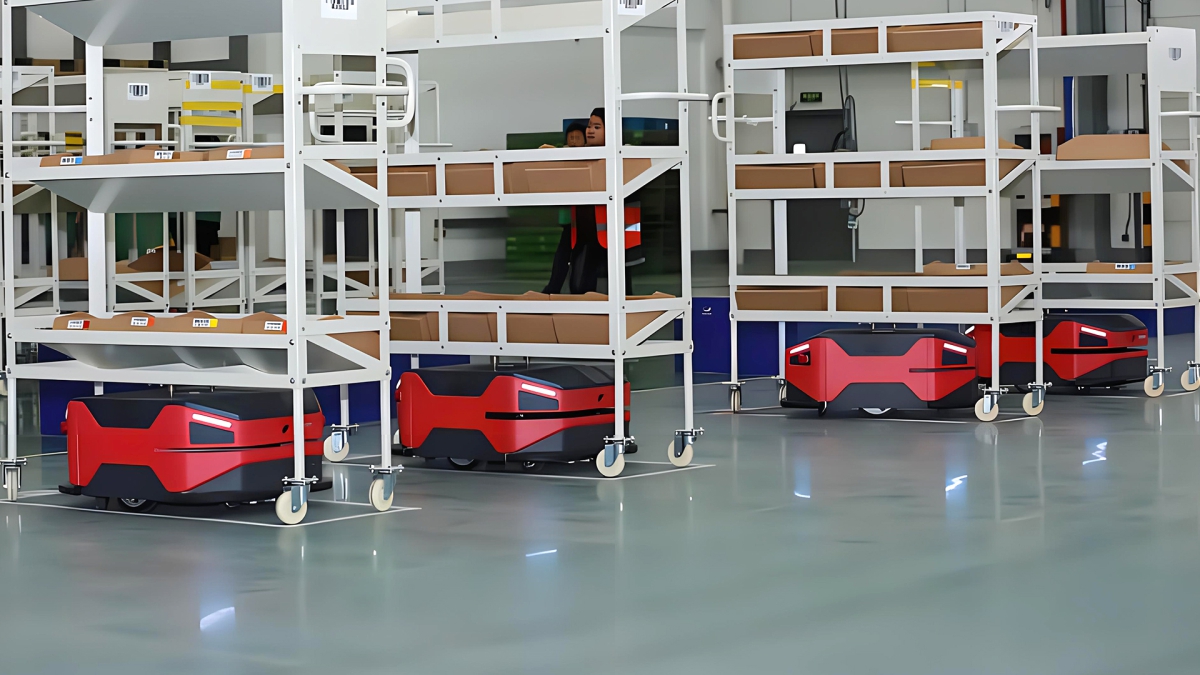
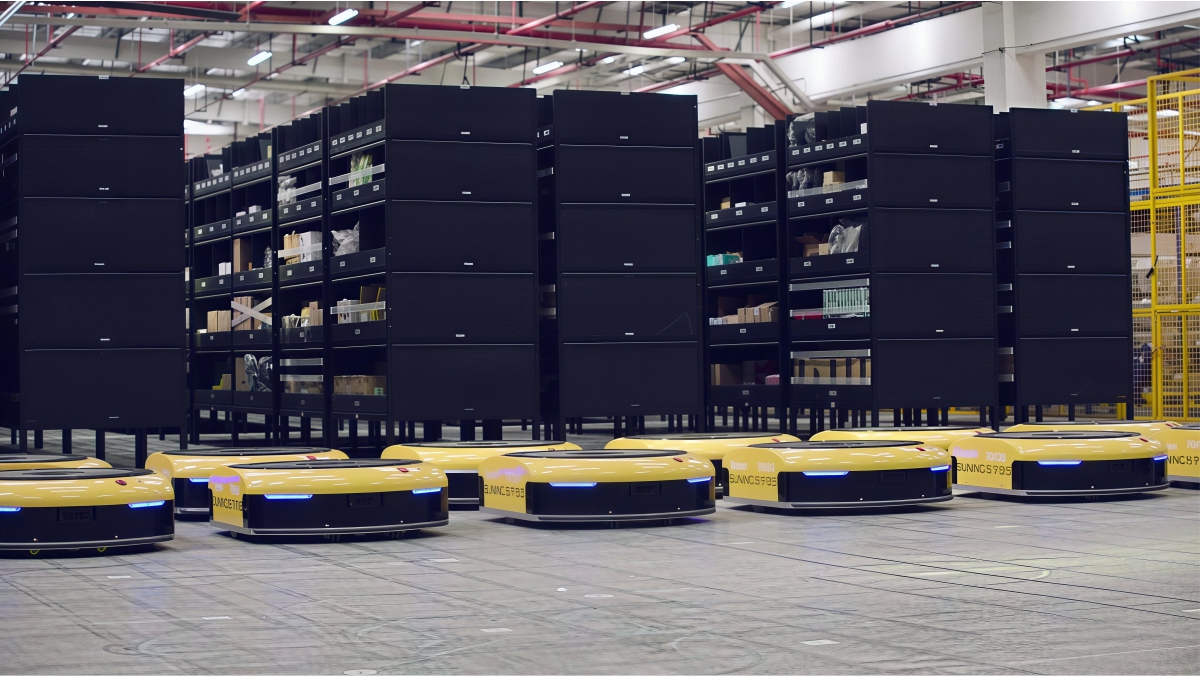
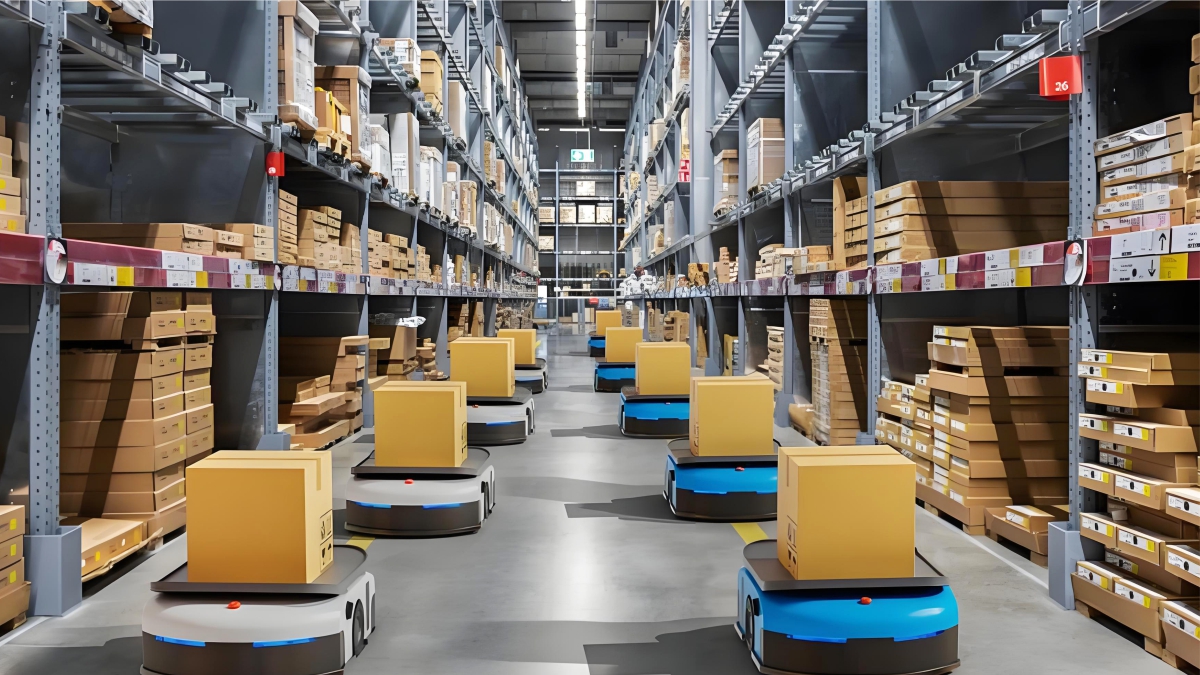
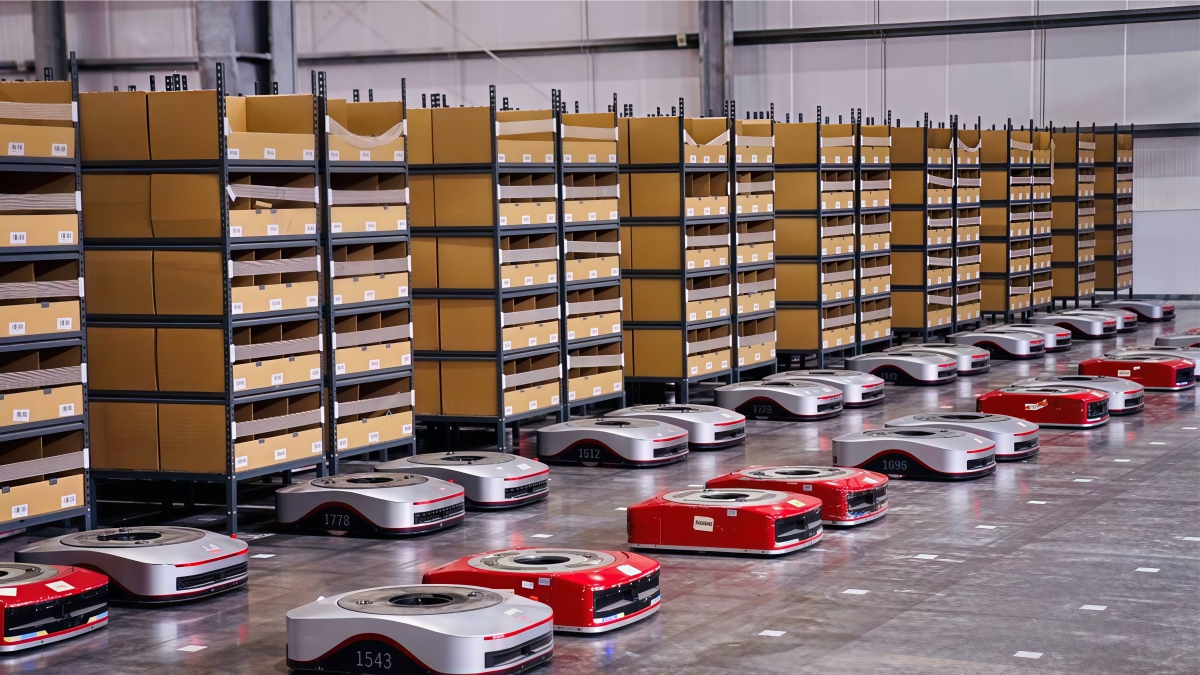
The peak surge of an e-commerce mega-sale has just passed. In the warehouse, the busiest actors are no longer sorting workers rushing back and forth, but logistics robots gliding quietly through the aisles. Carrying shelving units or bins, they move precisely among shelves, avoid obstacles, and dock as if tireless. This scene is becoming the norm in hundreds of e-commerce warehouses across China. One of the core components supporting the efficient operation of these robots is a drive device known as a robotic in-wheel motor.
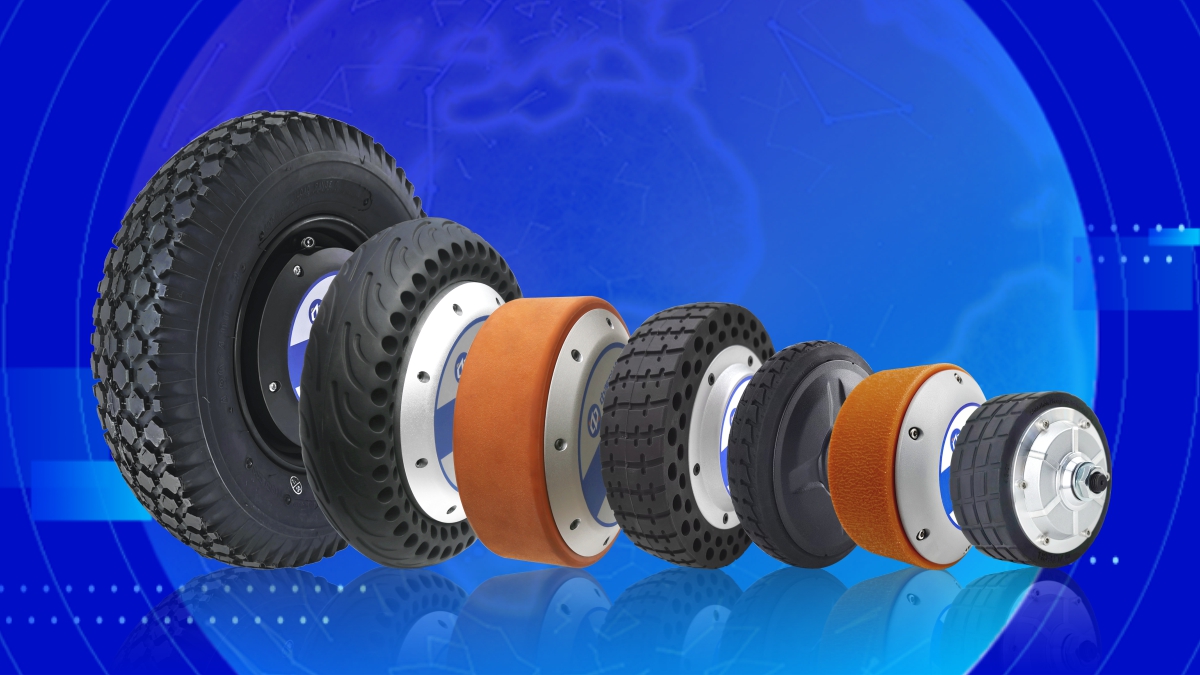
For those new to this concept, it can be understood as follows: traditional robots move in a way analogous to placing an automobile engine under the hood and driving the wheels through a driveshaft. An in-wheel motor, by contrast, packs the power unit directly “inside” the wheel, making each wheel itself an independent drive unit. This seemingly simple structural change is fundamentally reshaping the performance boundaries of logistics robots.
Why Do E-Commerce Warehouses Need In-Wheel Motors?
The operating environment of an e-commerce warehouse is far more demanding than one might imagine. During peak order periods, hundreds of robots must operate simultaneously within limited aisles, starting and stopping frequently, docking precisely with shelves, and turning in place in narrow spaces. This imposes several core requirements on the drive system: fast response, precise control, compact structure, and hassle-free maintenance.
Traditional solutions use a split architecture of “motor + reducer + wheel,” which involves many components, a large footprint, and complex installation and commissioning. More critically, mechanical interfaces among multiple components introduce cumulative errors that affect the robot’s positioning accuracy, while the goods-to-person (G2P) picking model in e-commerce warehouses is extremely sensitive to docking accuracy.
The emergence of the in-wheel motor has changed this. It integrates the drive, motor, reducer, and wheel into a compact module, eliminating the external transmission mechanism. The benefits are direct: simpler installation, faster response, and more accurate positioning. For example, mainstream integrated servo in-wheel motors on the market can operate smoothly at speeds as low as 0.1 rpm, enabling robots to achieve millimeter-level precise docking.
What Do In-Wheel Motors Bring to Logistics Robots?
First, simplified structure and freed-up space. Traditional solutions require reserved installation space for the motor and reducer, whereas an in-wheel motor occupies only the wheel’s own position. For logistics robots pursuing compact designs, every inch saved can be used to increase battery capacity or expand the payload platform.
Second, a leap in control precision. In e-commerce warehouses, robots must frequently dock precisely with shelves, conveyor lines, and charging stations. The direct-drive structure of an in-wheel motor eliminates transmission backlash. Combined with a built-in high-resolution encoder, it enables precise closed-loop control of speed and position. This precision is crucial in goods-to-person picking scenarios—being off by just a few centimeters means pickers have to bend or reach farther.
Third, adaptability to complex floors. E-commerce warehouse floors are not perfectly level; there may be thresholds, cable troughs, or slight slopes. In-wheel motors provide excellent low-speed torque output, allowing them to climb slopes or cross obstacles smoothly even under heavy loads. Their IP67-rated protection enables them to handle humid or dusty warehouse environments.
What Is Happening in the Market?
Data can illustrate the speed of change in this sector. In 2025, the global logistics robot market exceeded US$68 billion, with China contributing more than US$22 billion. China’s installed base of warehousing and logistics robots exceeds 1.2 million units, and sorting efficiency has increased by an average of 300%.
More noteworthy are the moves of leading companies. In the climbing-robot warehouse delivered by Cainiao in Dongguan, 134 robots operate in coordination, achieving three times the storage area and twice the picking efficiency of a manual warehouse. JD.com has announced that it will procure 3 million robots and 1 million unmanned vehicles over the next five years to fully advance unmanned logistics.
Behind these figures is a shift in e-commerce warehouses’ attitude toward automation equipment—from “worth a try” to “must-have.” Labor shortages, rising labor costs, and peak labor gaps during major promotions are all forcing warehouses to accelerate their intelligent transformation.
A Few Insights for Newcomers
If you have just begun to follow this field, the following observations may be helpful:
An in-wheel motor is not an “upgrade option” but an “architectural reconfiguration.” It changes not just a component, but the electrical architecture and spatial layout logic of the entire robot chassis.
Integration is the trend. Future logistics robot chassis will become increasingly “clean”—with only power and communication cables exposed—while mechanical complexity is greatly reduced and reliability rises accordingly. In-wheel motors are a core driving force behind this trend.
China is the main battlefield. In 2025, the share of overseas revenue for Chinese logistics robot companies exceeded 28% for the first time, with medium-payload autonomous mobile robots (AMRs) as the main export products. Product capabilities honed in China’s mature e-commerce scenarios are being exported to Southeast Asia, Europe, and North America.
From storage to sorting, and from handling to delivery, logistics robots are becoming the “infrastructure” of e-commerce warehouses. The in-wheel motor is the most inconspicuous yet most critical “joint” in this infrastructure. It may not stand out, but without it, the entire system cannot run.
Post time: Oct-15-2026