
Entering 2026, service robot is no longer distant imagination in science fiction movies, but intelligent companion quietly integrated into our daily lives. From the guide in the hotel lobby to the cleaning assistant at home, from the delivery staff in the restaurant to the nursing equipment in the rehabilitation center. The “heart” that drives these robots to move flexibly – hub motor – is undergoing a profound evolutionary revolution. Based on the industry trends and technological breakthroughs since the beginning of the year, we can clearly outline the core development trend of service-oriented robot wheel hub motors in 2026.
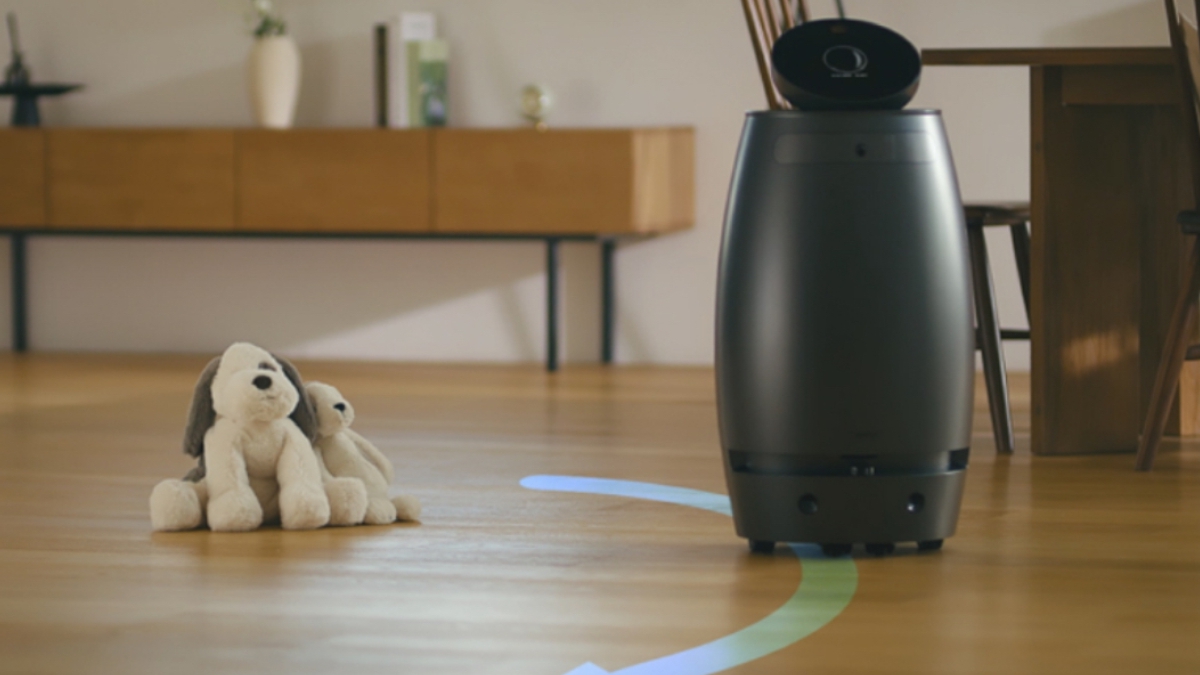
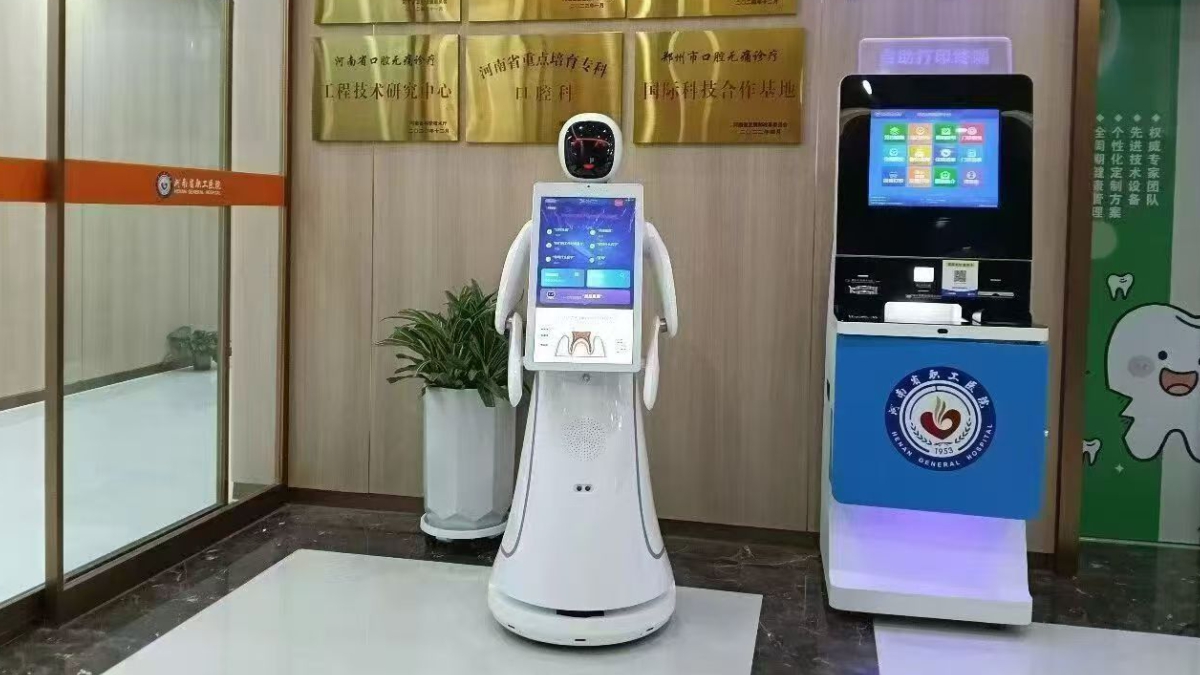
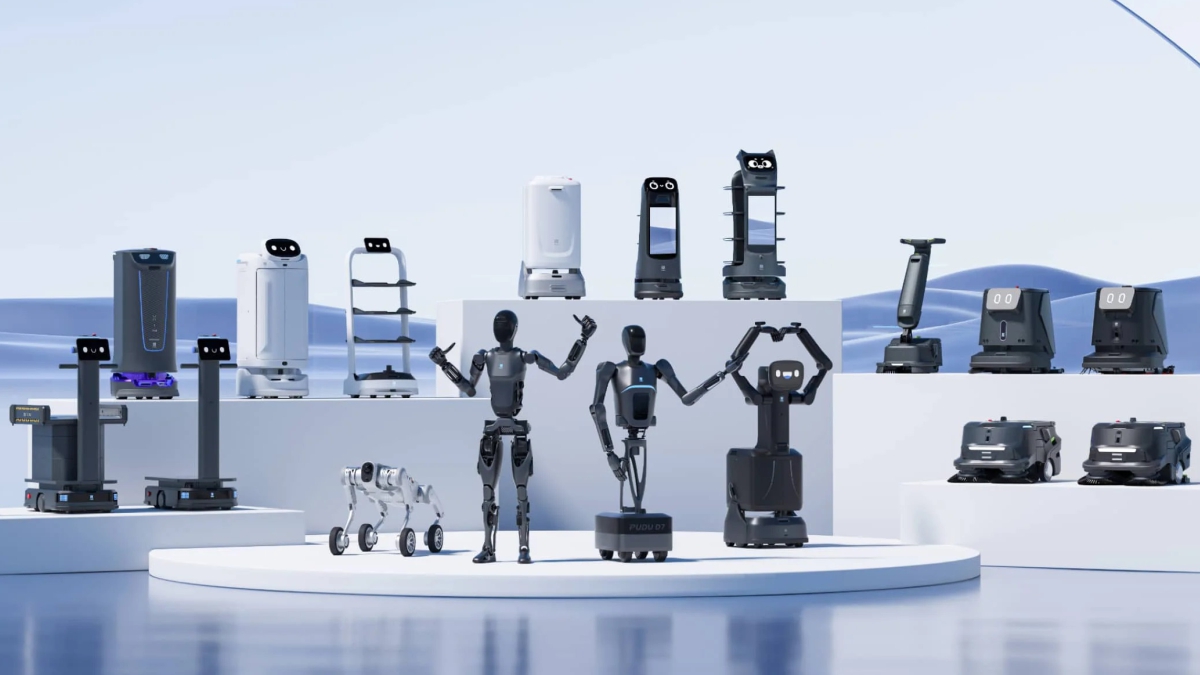
1. Highly Integrated: A Paradigm Transition from “Components” to “Intelligent Wheel Modules”
In 2026, the pursuit of “plug and play” by service robot is accelerating the evolution of hub motor towards high integration. The traditional “motor + gearbox + driver + sensor” standalone solution is no longer able to meet the market’s stringent requirements for “high quality, low cost, and fast delivery”.
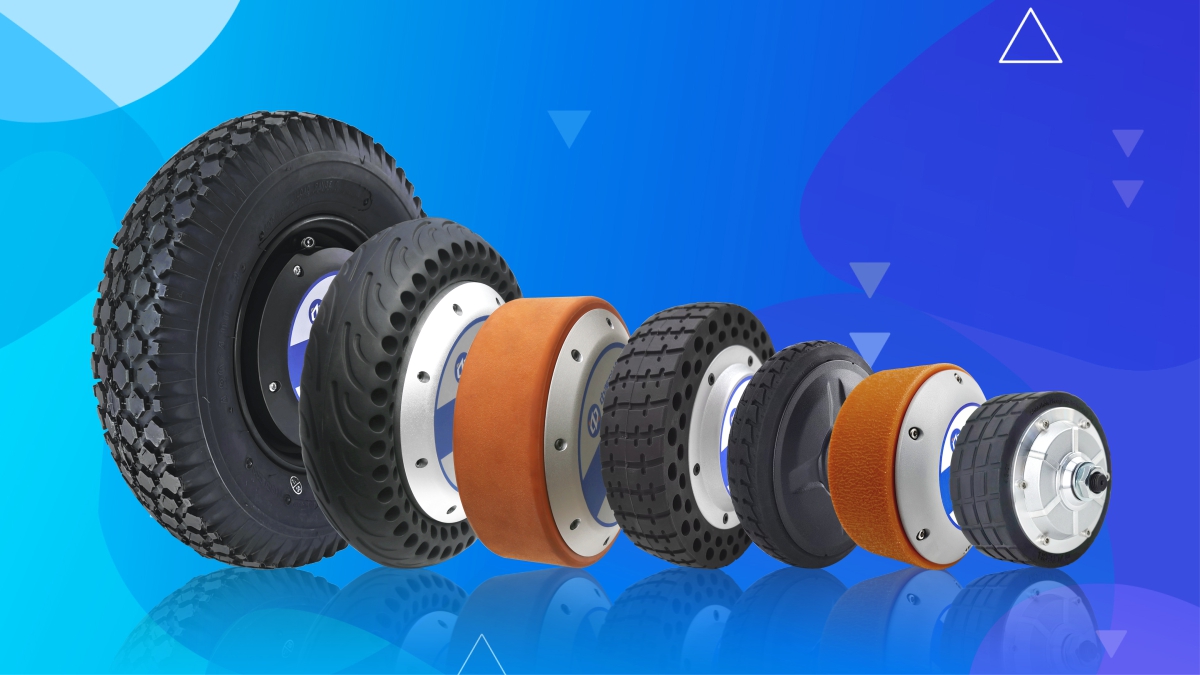
Industry trend shows that hub motor is evolving into “fully functional intelligent wheel module” that integrates tire, motor, gearbox, encoder, thermistor, and even MCU controller. The value of this deep integration is evident: it saves customers over 30% of installation space, reduces assembly time by over 80%, and significantly improves system reliability and consistency. For hotel delivery robot and mall guidance robot, this means simpler chassis design, more flexible deployment methods, and lower long-term operation and maintenance costs.
2. Silencing and High Response: Reshaping the Comfortable Experience of Human Computer Collaboration
The core feature that distinguishes service robot from industrial robot is that it requires intimate collaboration with humans in the same space. This puts almost stringent demands on its power system – it requires both “whisper level” quietness and “instinctive level” agility.
The hub motor technology of 2026 is precisely responding to this demand. By using a brushless structure combined with FOC magnetic field orientation control algorithm, the new generation of hub motor can hardly hear the mechanical noise of traditional driving schemes during operation. In densely populated shopping centers or rehabilitation wards that require a quiet environment, service robot equipped with such motor can achieve millimeter level positioning accuracy and millisecond level response speed, smoothly follow crowds, flexibly avoid pedestrians, and completely bid farewell to the rigid feeling of traditional robots’ “one card, one stop”.
3. Intelligent Perception: Empowering Robot with ‘Sensible’ Feet
The explosive development of artificial intelligence is upgrading hub motor from passive actuators to active sensing units. In 2026, intelligent hub motor with built-in high-precision magnetic encoder (resolution up to 0.088°) and status monitoring systems will become mainstream.
These motors can not only accurately control speed and torque, but also collect real-time operating data such as temperature, vibration, torque, etc., combined with AI algorithms to achieve adaptive control and fault prediction. When the cleaning robot drives from a smooth floor into a thick carpet, the motor can automatically sense the change in resistance and adjust the output strategy; When the assistive motor of the rehabilitation robot detects abnormal vibration, it can provide early warning of potential faults. This closed-loop of “perception decision execution” makes the movement of service robots more natural, safe, and reliable.
4. Lightweight and High Efficiency: The Invisible Driver of Range
Range anxiety is not exclusive to electric vehicle, service robot also face the dilemma of “how many charges a day”. The solution for 2026 comes from a dual breakthrough in materials science and topology.
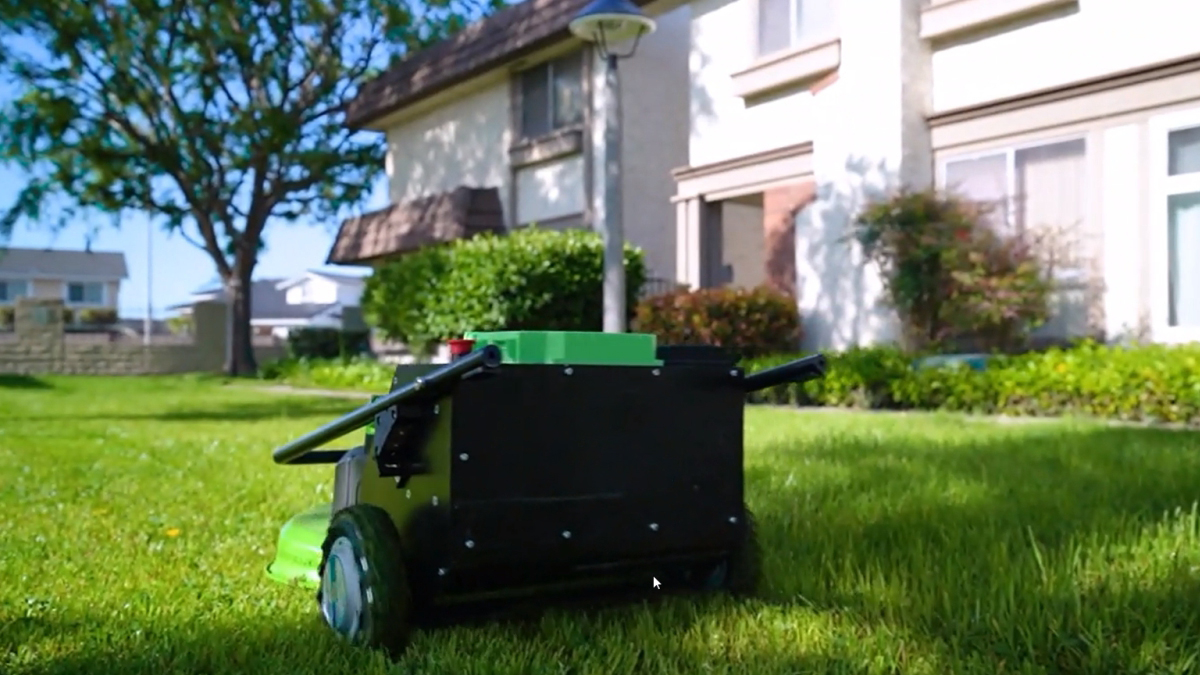
On the one hand, the application of lightweight materials such as aluminum alloys and magnesium alloys, as well as optimized winding structures, has reduced the volume of hub motors by about 30%, freeing up valuable internal space for robots. On the other hand, the maturity of energy feedback technology allows robot to convert kinetic energy into electrical energy for storage when going downhill or decelerating, increasing the endurance of lawn mowing robots and other products by about 20%.
5. Scenario customization: segmented layout from “universal” to “specialized”
The explosive growth of service robot application scenarios has given rise to a trend of deep customization of hub motors. The market in 2026 will no longer be dominated by electric motors, but by scene defining features.
At the just concluded CES 2026, the new generation of electric omnidirectional wheels showcased by Agilent are a typical example: 7N. m torque output, stationary rotation, lateral translation obstacle avoidance, specifically optimized for narrow spaces and complex road conditions. Facing the courtyard mowing scene, the motor requires low-speed high torque and ≤ 1mm mowing height error control; Facing the medical nursing scene, the motor pursues ultimate stability and a human like feeling of assistance. This evolution from “standardization” to “scenarization” is driving the entire industry chain to delve deeper into more refined vertical fields.
Looking back at the spring of 2026, the development trajectory of service-oriented robot hub motor is clearly visible: highly integrated and simplified applications, silent and highly responsive to enhance the experience, intelligent perception endows spirituality, lightweight and efficient can break through boundaries, and scene customization precisely empowers. When the power system completes this silent and turbulent transformation, we will welcome a group of intelligent partners who can truly integrate into life, understand scenarios, and collaborate with nature. The small motor rotates the wheels, but drives the great future of human-machine symbiosis.
Shenzhen Zhongling Technology Co., Ltd has been deeply involved in the service robot industry for many years. As a leader in the industry, we vigorously promote the research and development of various customized solutions. There are countless successful solutions that are in line with the trend of the times and contribute to the development of the service robot industry. For more information about Shenzhen Zhongling Technology Co., Ltd, please follow www.robotmotor.com.
Post time: Mar-24-2026