
In fields such as warehouse AGVs and cleaning and service robots, traditional separate drive solutions are facing the impact of the integration trend. The market is pursuing “high quality, low cost, and fast delivery,” and a deep understanding of the development prospects of hub motors with built-in reducers (also known as “servo wheel modules”) is crucial for enterprises to formulate strategies and maintain competitiveness.
I. Market Trends: Demand-Driven High-Speed Growth
In 2024, the market size of intelligent mobile robot motors and reducers in China exceeded RMB 1.1 billion and RMB 1.2 billion respectively, with wheeled mobile robots accounting for over 62%. Future growth will primarily come from three aspects: first, humanoid robots will lead a surge in demand, with their extremely high requirements for the number and performance of motors, and are expected to become the dominant market before 2030; second, automation in industrial sectors (such as new energy and semiconductors) will continue to drive demand for AGVs/AMRs; and third, commercial service scenarios (hotels, sanitation, etc.) will see accelerated penetration.
At the same time, customer demand has shifted from “component procurement” to “solution procurement,” with a greater emphasis on reducing overall costs, shortening R&D cycles, and improving system reliability. This has further driven the development of highly integrated solutions.
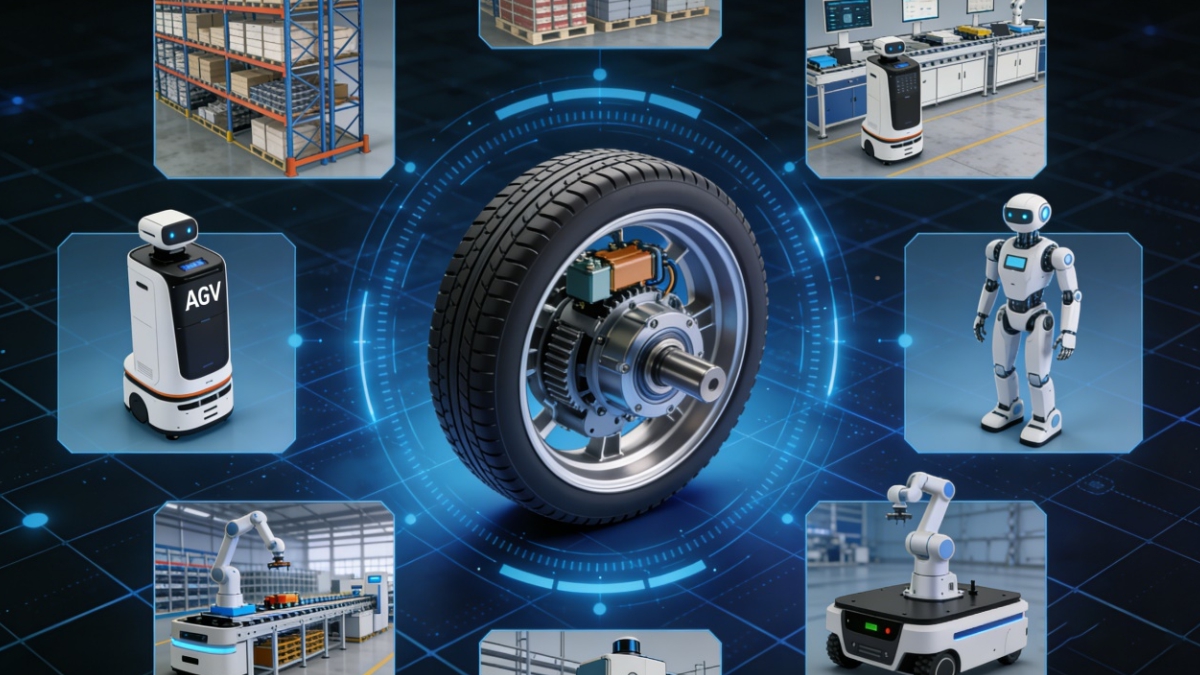
II. Technological Direction: Integration Becomes the Mainstream
The technological evolution has shown a clear path: from separate motors and drivers, to integrated drives, motors, and reducers, and then to “fully functional intelligent wheels” that integrate tires and sensors. Servo wheels have successfully validated this trend, saving customers more than 30% of installation space, reducing labor hours by more than 80%, and significantly lowering overall operating costs.
The core value of a deep integration solution lies in simplifying customer design, improving system reliability and consistency, and reducing total cost of ownership (TCO), thereby solving long-standing pain points in the industry such as complex installation, poor compatibility, and difficult maintenance.
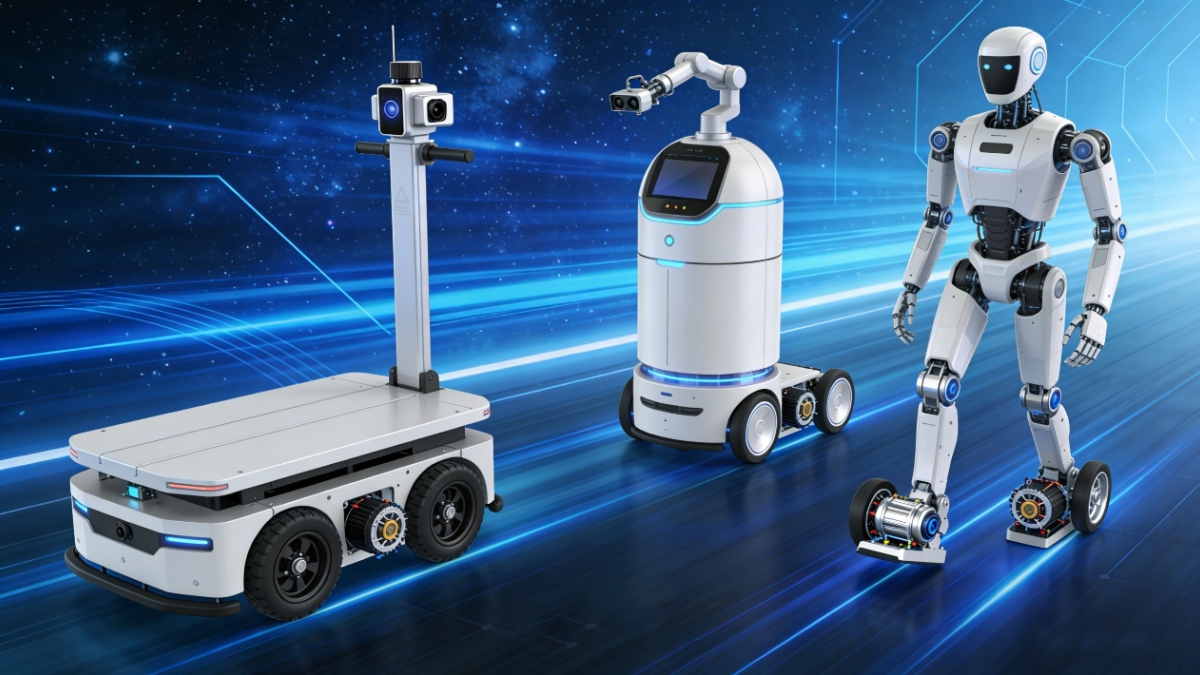
III. Future Directions and Key Challenges
Future development will revolve around “more efficient, more intelligent, and greener”:
Efficiency Revolution: By optimizing electromagnetic design, adopting lightweight materials, and improving gear transmission, power density and energy efficiency are increased.
Intelligent reconfiguration: Integrating encoders, temperature and torque sensors, and combining AI algorithms, it enables adaptive control, fault prediction and diagnosis, giving the power unit perception and decision-making capabilities.
Ecosystem Collaboration: Promote the standardization of hardware interfaces and communication protocols, and collaborate with upstream and downstream partners to reduce overall costs.
The main challenges include: thermal management in confined spaces, balancing lightweight design and reliability, environmental adaptability in different scenarios, and how to control costs through scaling and supply chain optimization.
IV. Summary and Lessons Learned
The built-in geared hub motor represents not only a product upgrade but also a paradigm shift in drive systems towards “standardized intelligent modules.” Enterprises should focus on the following directions:
1. Seize strategic opportunities: In sectors with clear growth potential, take the lead in providing cost-effective integrated solutions to secure a favorable position in the industry.
2. Reshape the core of competition: shift from competition based on component performance to comprehensive competition based on integration capabilities, scenario understanding, and intelligence level.
3. Development Path Planning: In the short term, focus on advantageous areas and launch modules that solve installation and commissioning pain points; in the medium and long term, invest in R&D to break through key technologies such as thermal management, lightweighting and intelligent sensing, and carry out collaborative cooperation in the industrial chain.
The revolution of “integration and intelligence” in power systems is underway, which is both a challenge and a historic opportunity to achieve leapfrog development.
From the steam engine to the internal combustion engine, and then to the electric motor, each revolution in power sources has profoundly changed the world. Today, within the robotics industry, a revolution in the “integration and intelligence” of power systems has arrived. This presents both a challenge and a historic opportunity for us to achieve leapfrog development. We at Zhongling Technology hope to become both promoters and beneficiaries of this revolution.
Post time: Jan-06-2026